Posts

Showing posts with the label Spring

Avoid Vertical Limits in Microservice Architectures
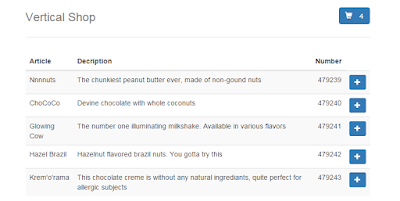
Image
The microservice architecture allows us to partition an application into tiny sub-applications, which are easy to maintain and to deploy. This pattern is already widely adopted to implement backend systems. But the frontend is usually still one large application, at least when it comes to deployment. This article describes some thoughts on how to address this problem. The microservice architecture is en vogue, everybody seems to know all about it, and feels like having to spread the truth. Including me ;-) But honestly, we are just about to learn how to cope with this kind of architecture. I guess we are like a kid that just managed to make some first steps, when we suddenly try to start running… that’s usually the moment when you fall over your own feet. Microservices are no free lunch, it definitely has its price (that’s the part we have already learned). For developers it feels uncomfortable, since instead of developing one application, they have to deal with dozens or hundreds. U...

Java and JSON ain't friends

Image
Most application frameworks provide some REST support, which is – depending on the language you are using – either dirt cheap, or quite complex. In the Java world part of these frameworks is some kind of mapping from JSON to Java and vice versa, most of them using the Jackson mapping framework. It feels quite natural: you model your domain objects directly in Java. If you don’t have any constraints, the JSON might even follow your model. If the JSON is predefined (as part of the API), you can either design your Java classes so they fit the generated JSON, or provide Jackson with some mapping hints to do so. But you know all that, right? So what am I talking about here? The point is: domain models may vary in size from a few properties to x-nested sky high giants… and so are the resulting Java model classes. What makes things even worse, is that domain models change over time. Often you don’t know all the requirements front of, also requirements change over time. So domain models ar...

Spring Integration Tests with MongoDB rulez

While unit testing is always preferable, integration tests are a good and necessary supplement to either perform end to end tests, or tests involving (third party) backends. Databases are such a candidate where integrations might make sense: usually we encapsulate persistence with some kind of repository service layer, which we can mock in tests running against the repository. But when it comes to testing the repository itself, integration tests are quite useful. Spring integration tests allow you to test functionality against a running Spring application, and thereby allows to test against a running database instance. But as you do in unit tests, you have to perform a proper set up of test data, and clean up the database afterwards. That's what this article published on DZone is about: proper database set- and clean-up in Spring integration tests with MongoDB.